Get Quote
Home > DC Axial

DC Axial

By type

By industry

Rated Voltage(V)

Size(mm)

Max.Air Flow(m³/h)

Max.Pressure(Pa)

Input Power(W)

Speed(rpm)

Noise(db)

Stocking Options

Environmental Options

Media

Exclude

2 results

Applied Filters

Showing
1-2
1-2
of 2
Download Table
Mfr Part # Rated Voltage(V) Size(mm) Max.Air Flow(m³/h) Max.Pressure(Pa) Input Power(W) Speed(rpm) Noise(db)
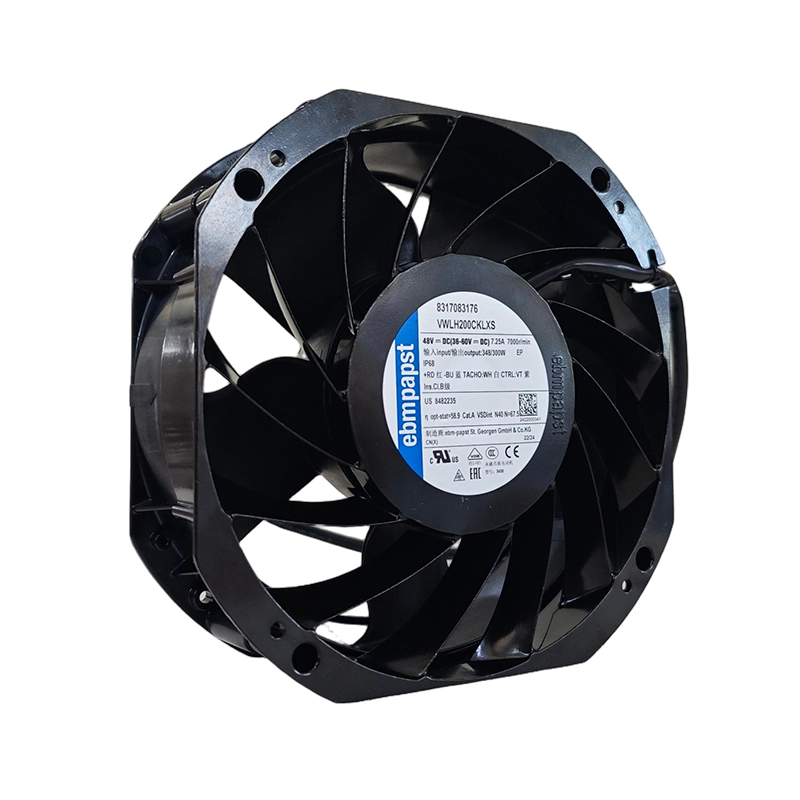
8317083176-VWLH200CKLXS | ebm-papst 48V DC Axial Fan Module for EV Chargers

Configured for EV Chargers, the ebm-papst 8317083176-VWLH200CKLXS is a 48 V DC axial fan, characterized by model-specific construction for its stated cooling duty. The value helps verify equipment fit.

48 200*200*70 - - - - -
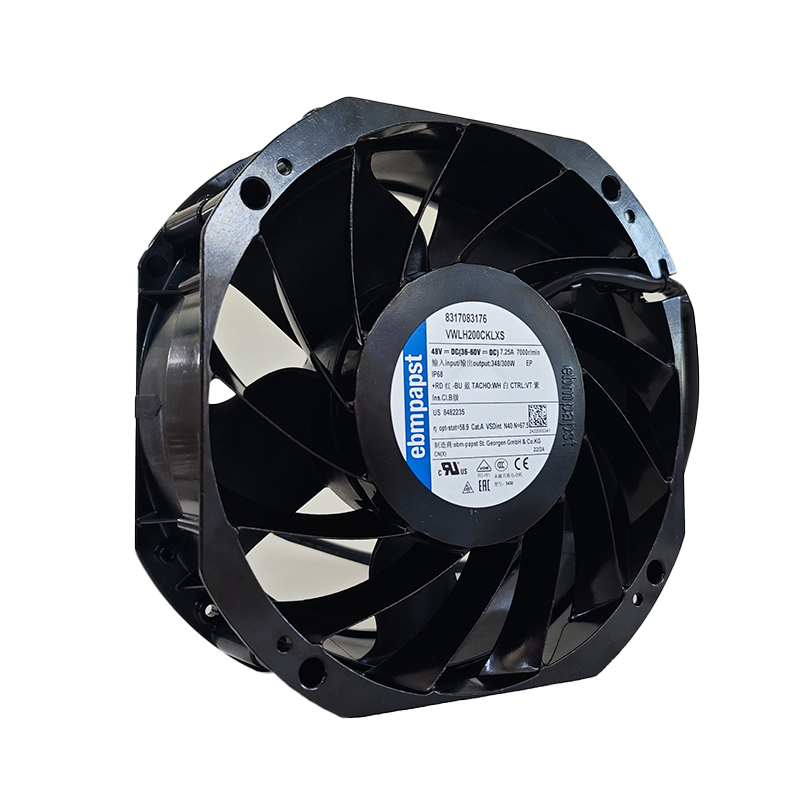
8317081096 VWLH200CKLXS | ebm-papst 48V 348W DC Axial Fan Module for EV Chargers

Supporting EV Chargers, the ebm-papst 8317081096 VWLH200CKLXS is a 48 V DC axial fan, whose supplied data highlights a documented speed of 7,000 rpm. The rating clarifies its operating profile.

48 200*200*70 1820 1300 348 7000 -
Showing
1-2
1-2
of 2

About DC Axial

DC axial fans use brushed or brushless DC electric motors to drive impellers, making them ideal for applications where DC power is available or preferred — including server racks, data centers, telecommunication equipment, battery-powered devices, automotive electronics, and solar-powered systems. DC fans offer significant advantages over AC counterparts: they can be powered directly from 12V, 24V, or 48V DC power supplies, support pulse-width modulation (PWM) speed control for intelligent thermal management, and typically achieve higher energy efficiency at operating voltages below 48V. Modern brushless DC axial fans use electronic commutation to eliminate brush wear, resulting in longer service life (MTBF often exceeding 50,000 hours). When selecting a DC axial fan, engineers should specify: operating voltage (12V, 24V, 48V), airflow (CFM/m3/h), static pressure (mm H2O), frame size (25mm to 200mm typical), and whether PWM or tachometer output is required. Hengrui supplies DC axial fans from ebm-papst, SUNON, Sanyo Denki and all leading brands with comprehensive cross-reference tools and inventory availability.

Bag

Bag packaging indicates that a specified quantity of product is packaged by the manufacturer in a bag, sealed pouch, or similar container and sold as a unit without repackaging. It is also used to describe kits/assortments where components are packaged in separate bags according to part number or parametric value, rather than in a compartmentalized box or similar rigid container.