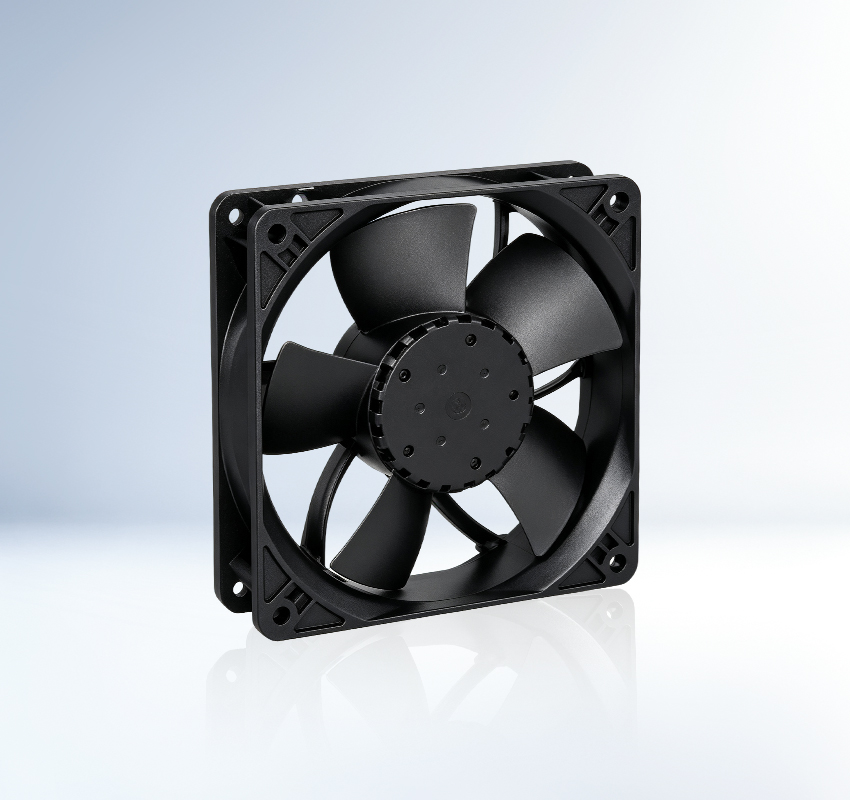
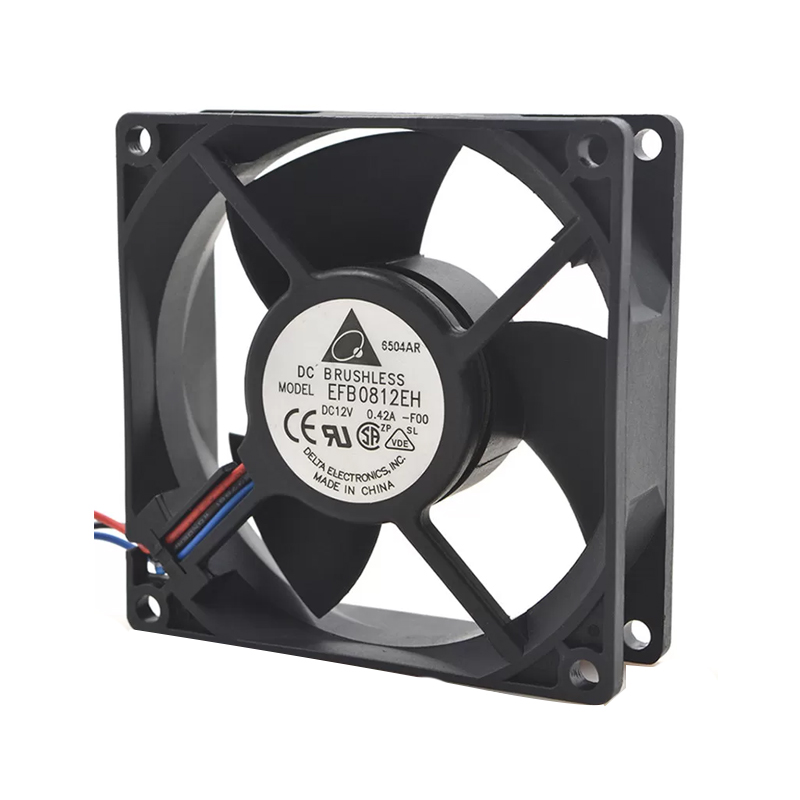
EFB0812EH combines 12VDC axial fan drive with a listed maximum static pressure of 87.7 Pa. Intended for industrial equipment cooling, it uses an 80 x 80 x 25 mm housing and a specified 5000 rpm rotor.
| Rated Voltage(V) | 12 |
|---|---|
| Size(mm) | 80×80×25 |
| Max.Air Flow(m³/h) | 88.4 |
| Max.Pressure(Pa) | 87.7 |
| Input Power(W) | 5.04 |
| Speed(rpm) | 5000 |
| Noise(db) | 42.5 |
The Delta EFB0812EH is a brushless DC axial fan for power-supply equipment. It provides a defined airflow path where equipment layout leaves limited room for passive heat removal.
The 12 V DC supply requirement gives electrical designers a clear basis for matching the fan to the equipment power architecture. The axial layout moves air along the fan axis, supporting a direct ventilation route through the equipment opening. Separating the intake from warmed exhaust improves the effectiveness of air exchange across the equipment section.
For system integrators, a confirmed operating point and exact interface match provide the basis for stable cooling and dependable replacement planning. Allow room for the specified inlet and outlet clearances.
For power-supply equipment, Delta EFB0812EH provides equipment cooling around power-conversion components. Managing electrical conversion losses helps maintain dependable power delivery.
In industrial control equipment, air movement helps handle heat accumulated within enclosures. Delta EFB0812EH supports cooling around controllers and electronic modules, contributing to stable automation operation.
Delta EFB0812EH supports cooling in energy equipment. Air circulation around electrical conversion assemblies helps manage recurring thermal loads, supporting reliable equipment operation.
In electronic equipment, Delta EFB0812EH helps remove heat from heat-generating circuit assemblies. The cooling solution addresses localized heat buildup to support thermal stability.
EFB0812EH is listed for Industrial Equipment cooling. Confirm the installed airflow demand, pressure loss and ambient conditions before approval.
Allow for the listed 80 x 80 x 25 mm size and follow the exact mounting drawing. Keep inlet and outlet clear, use the specified fasteners and verify wiring before energizing the fan.
12VDC is listed for EFB0812EH. Verify the allowable input range, phase, frequency where applicable, polarity and wiring diagram in the exact specification.
Serviceability depends on access, connector choice and mounting. Plan isolation and cleaning access, inspect the airflow path, and use the manufacturer's replacement guidance rather than attempting an unsupported repair.
EFB0812EH provides a defined axial fan format with a listed 5000 rpm speed in a 80 x 80 x 25 mm size. Compare its fan curve with the actual duty point rather than assuming a universal advantage.

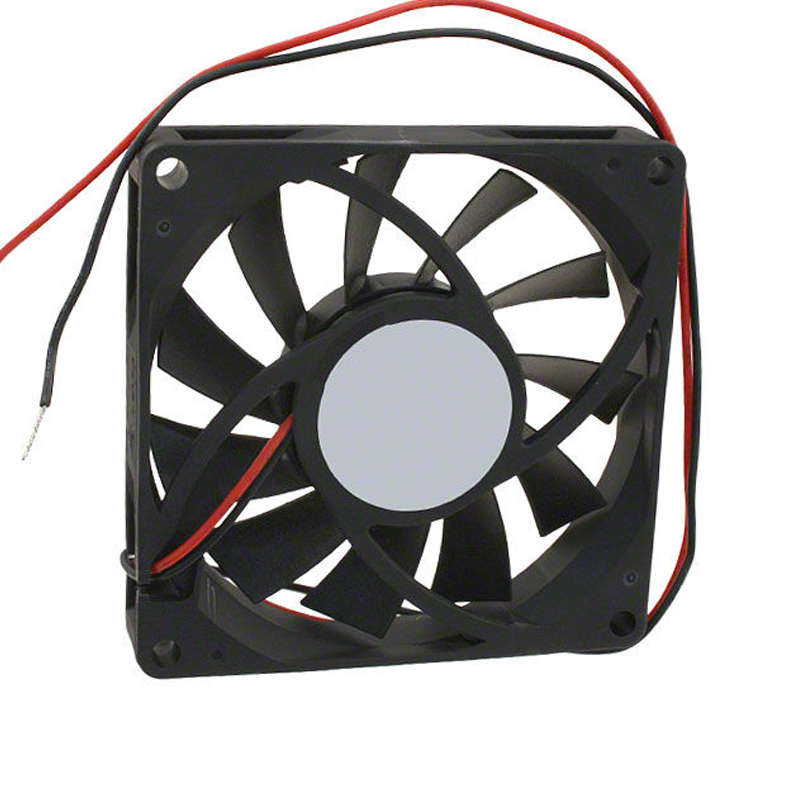
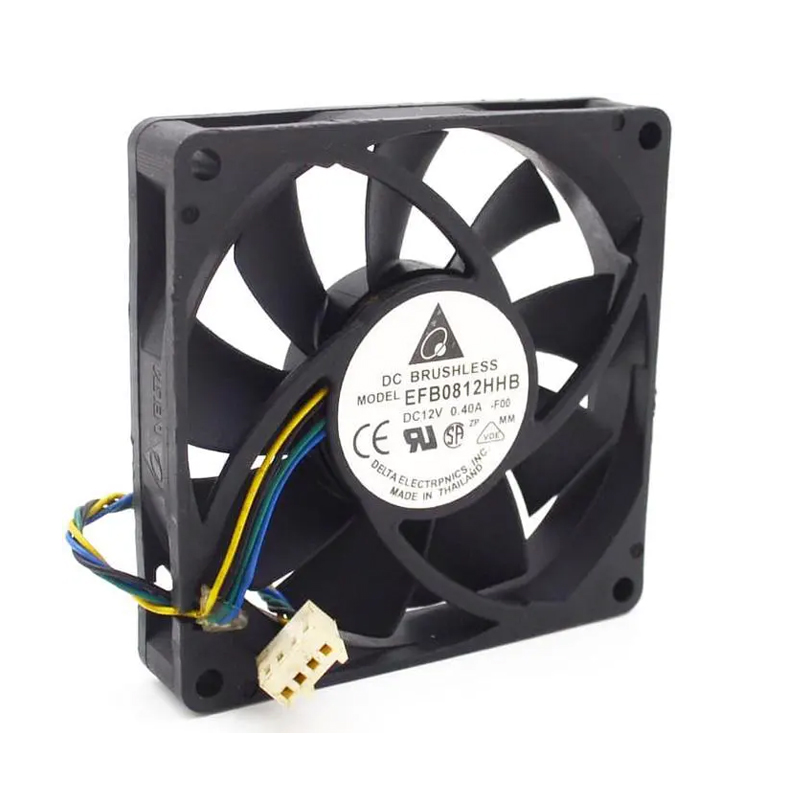
For industrial equipment ventilation, EFB0812HHB pairs a 3800 rpm axial fan rotor with a 12VDC supply. A 15 mm-deep, 80 mm frame and 3.96 W listed input define its fit, with 82.92 m3/h maximum airflow specified.
Read More
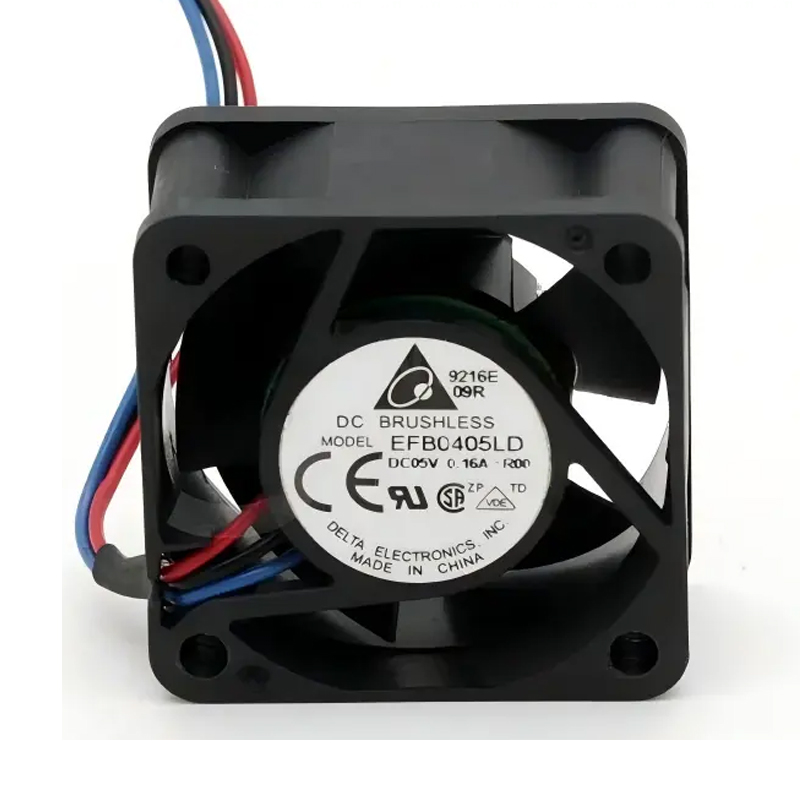
A listed 0.35 W input is the standout selection point of EFB0405LA-F00 for industrial electronics. This 5VDC axial fan uses a 40 x 40 x 10 mm frame and a 4000 rpm rotor for its compact cooling format.
Read More
EFB0812HHB-F00 combines a 15 mm-deep, 80 mm square axial fan frame with 12VDC operation. Intended for industrial equipment cooling, it lists 82.2 m3/h maximum airflow and 3800 rpm speed, with 3.96 W input.
Read More
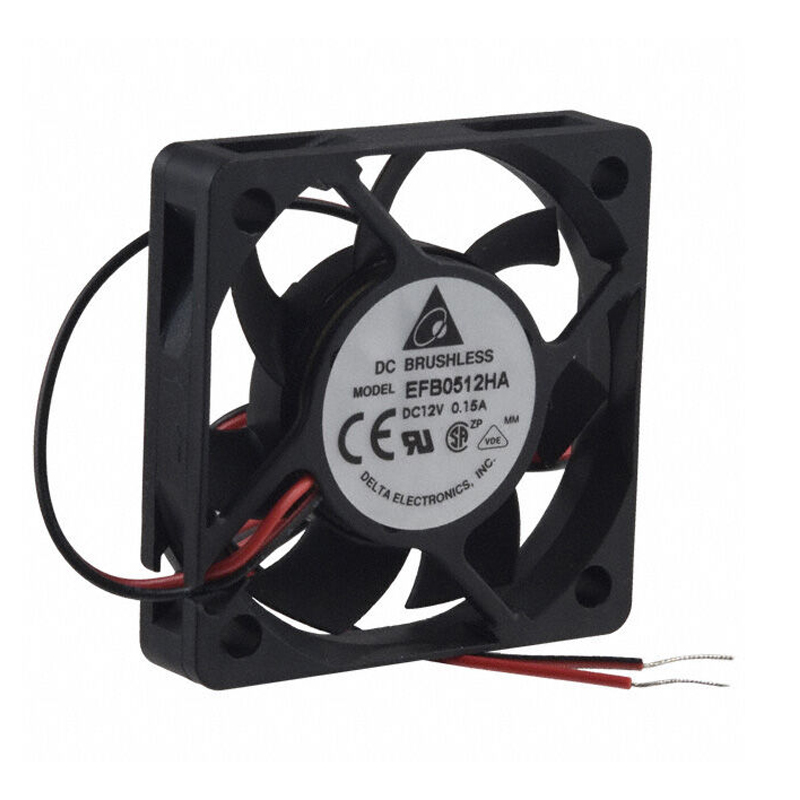
EFB0512HA is a 12VDC axial fan with a 50 x 50 x 10 mm body for industrial electronics cooling. A listed 1.2 W input and 5500 rpm speed distinguish this shallow format, with 19.38 m3/h maximum airflow.
Read More
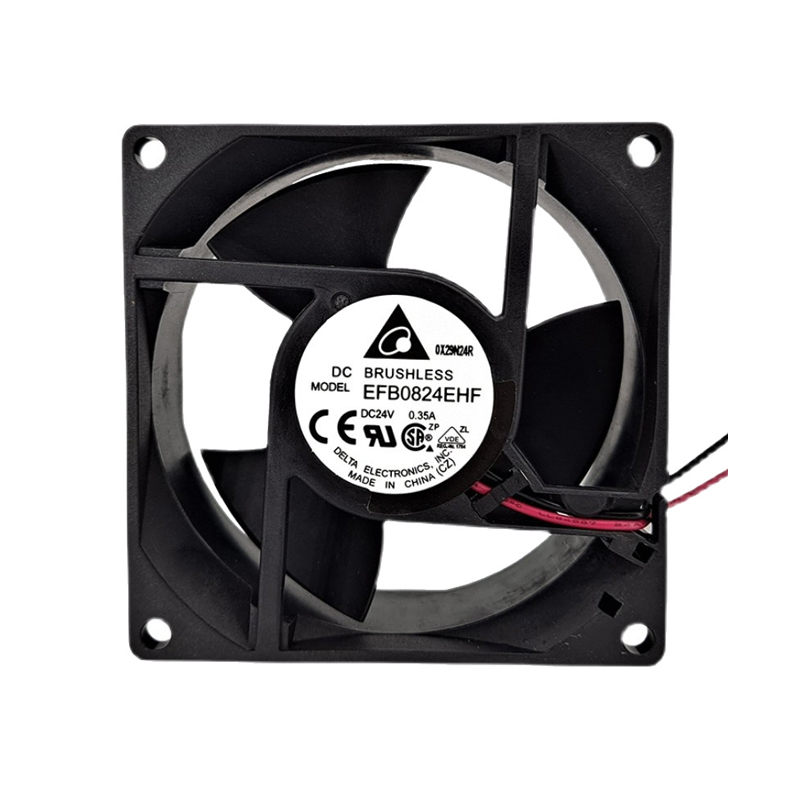
EFB0824EHF brings a 32 mm-deep axial format to industrial electronics cooling. This 24VDC fan measures 80 mm square and lists 5200 rpm operation, with 122.4 Pa maximum static pressure and 5.52 W input.
Read More
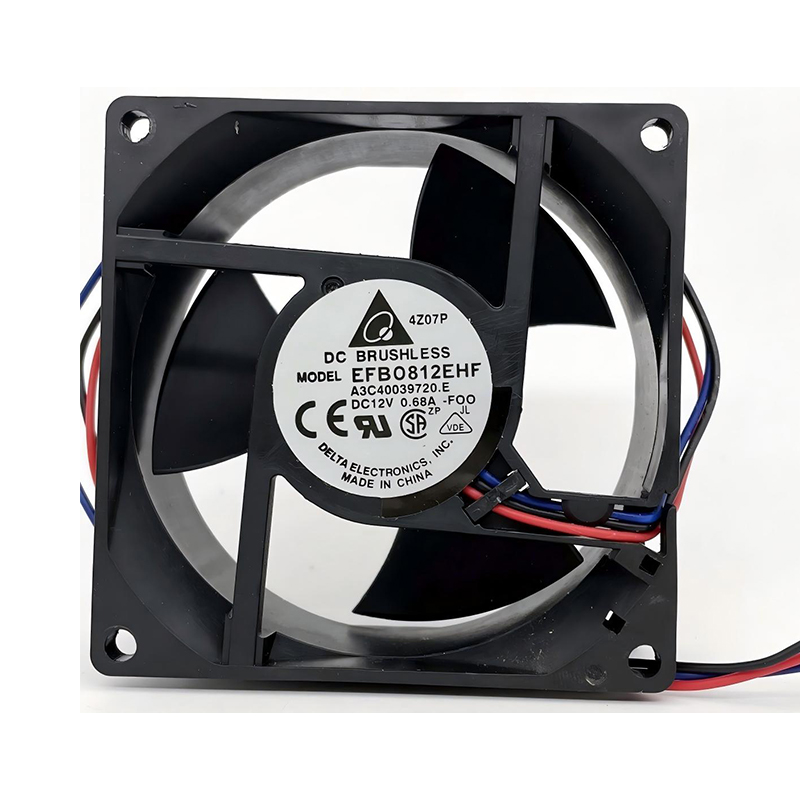
EFB0812EHF is a 12VDC axial fan for industrial electronics, using a 32 mm-deep, 80 mm square body. Its listed 4100 rpm speed and 105.3 m3/h maximum airflow distinguish it from the 25 mm EFB frame options.
Read More