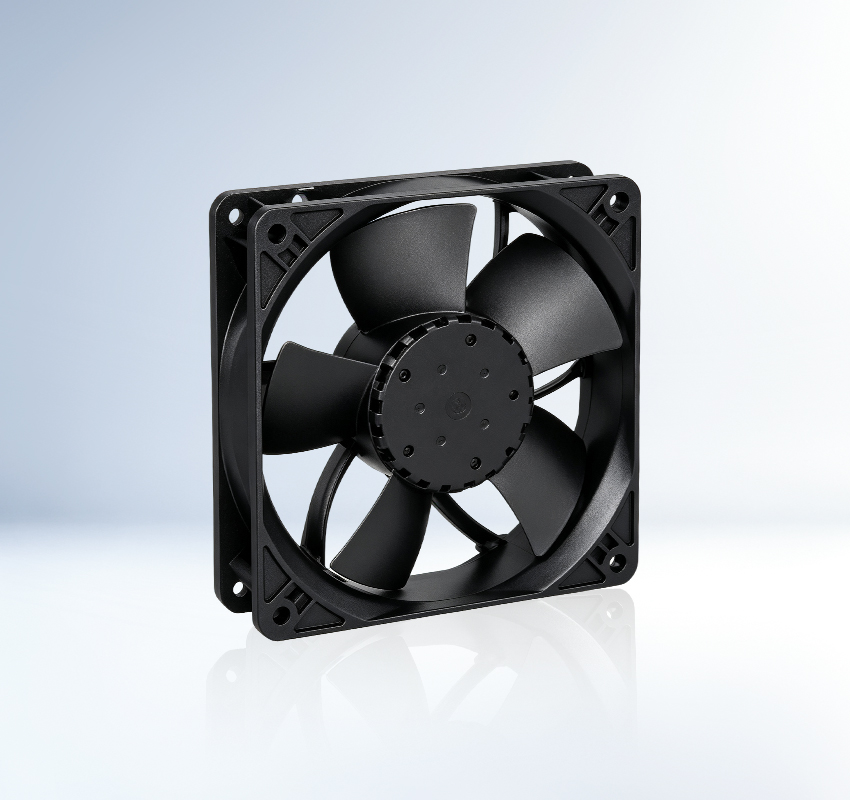
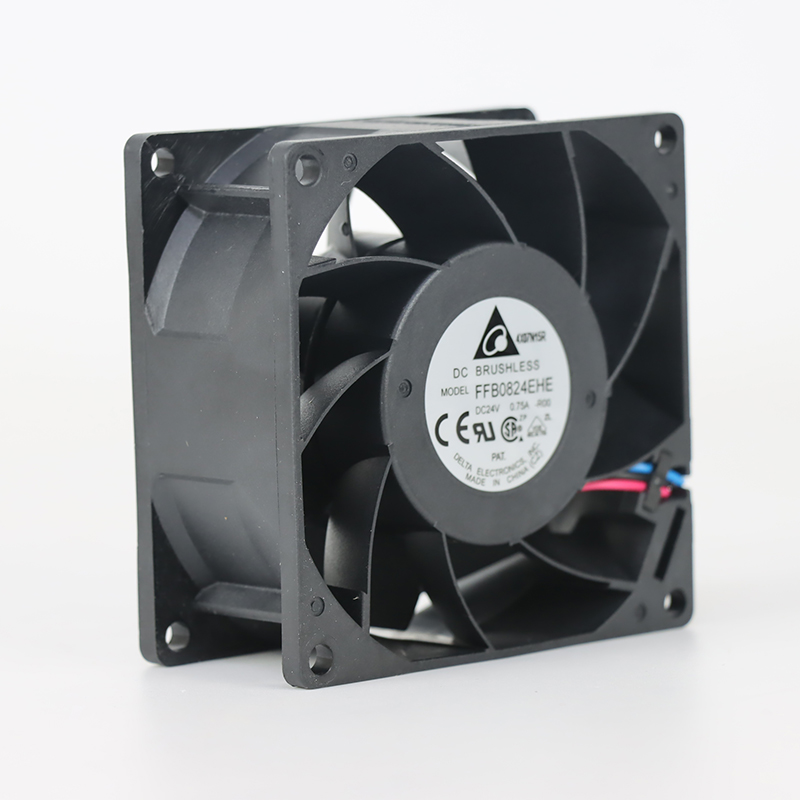
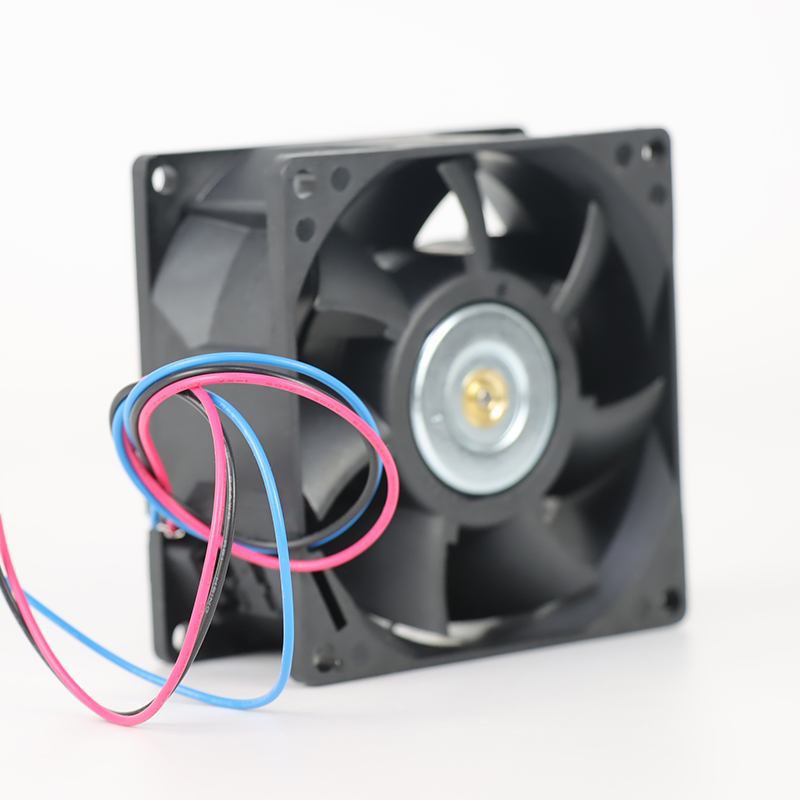
The 80 x 80 x 38 mm FFB0824EHEYWR is a 24VDC axial fan for servers and telecom equipment. Rated at 5700 rpm, it lists 136.34 m3/h maximum airflow; the full suffix identifies the required configuration.
| Rated Voltage(V) | 24 |
|---|---|
| Size(mm) | 80*80*38 |
| Max.Air Flow(m³/h) | 136.34 |
| Input Power(W) | 12 |
| Speed(rpm) | 5700 |
| Noise(db) | 52.5 |
For telecommunications equipment, the FFB0824EHEYWR from Delta is a brushless DC axial fan that supports active thermal management. A planned inlet-to-outlet route helps the installation carry component heat away.
The 24 V DC supply requirement gives electrical designers a clear basis for matching the fan to the equipment power architecture. The series uses ball-bearing motor support for rotational durability, giving OEMs a service-life-oriented construction for equipment cooling. Good inlet spacing helps reduce turbulence, which matters when balancing usable cooling capacity against installed sound levels.
Equipment manufacturers and maintenance teams should match the complete part number and installation limits for reliable operation across the service cycle.
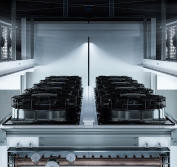
Delta FFB0824EHEYWR serves server and storage equipment, helping remove heat from processors, drives and other heat-producing assemblies. Airflow supports stable equipment temperatures.
In uninterruptible power systems, air movement helps handle heat produced during power conversion. Delta FFB0824EHEYWR supports cooling around power electronics, contributing to stable backup-power operation.
Delta FFB0824EHEYWR supports cooling in power-supply equipment. Air circulation around power-conversion components helps manage electrical conversion losses, supporting dependable power delivery.
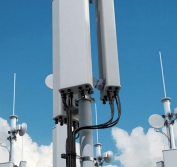
In telecommunications equipment, Delta FFB0824EHEYWR helps remove heat from densely arranged electronic assemblies. The cooling solution addresses continuous communication duty to support service continuity.
FFB0824EHEYWR is listed for Server and Telecommunications cooling. Confirm the installed airflow demand, pressure loss and ambient conditions before approval.
No maximum-pressure value is present in the filter row. Match the exact-model curve to the system resistance before using the fan in a restricted airflow path.
The supplied filter data does not establish an unconditional 24/7 rating. Confirm bearing life, temperature range, duty cycle and derating in the exact datasheet, then validate system-level redundancy.
The listed noise value is 52.5 dB, but compare values only under matching test conditions. Installed noise also depends on speed, restriction, resonance and enclosure geometry.
The provided parameters do not prove a cost saving. Compare purchase price, power at the real operating point, service access, expected life and downtime risk for the complete cooling system.

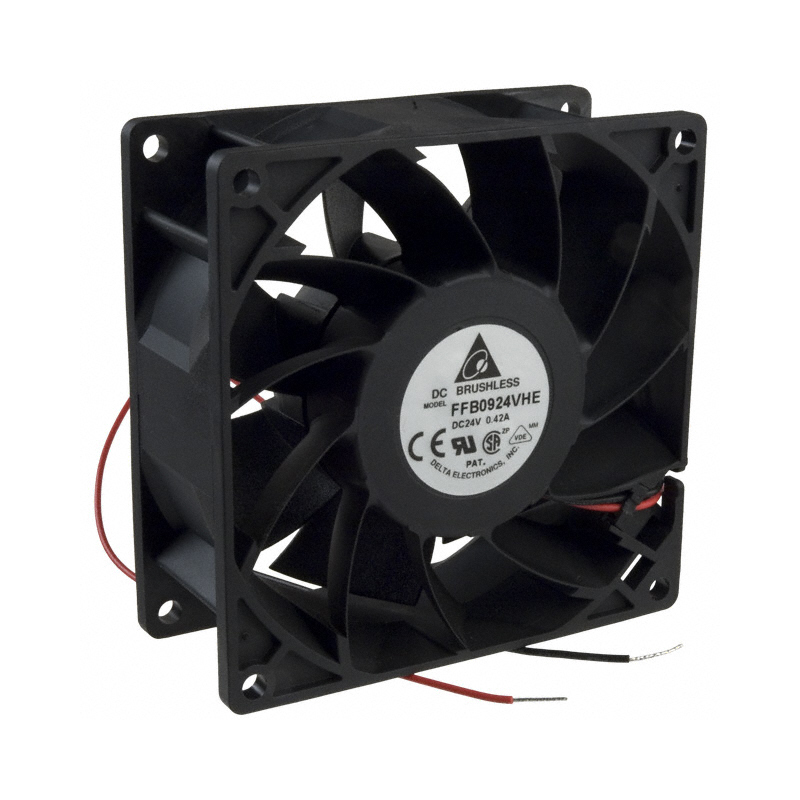
FFB0924VHE provides 24VDC axial fan cooling for servers and telecom equipment in a 92 x 92 x 38 mm format. A listed 3800 rpm speed accompanies 145.2 m3/h maximum airflow and a 6.72 W electrical input.
Read More
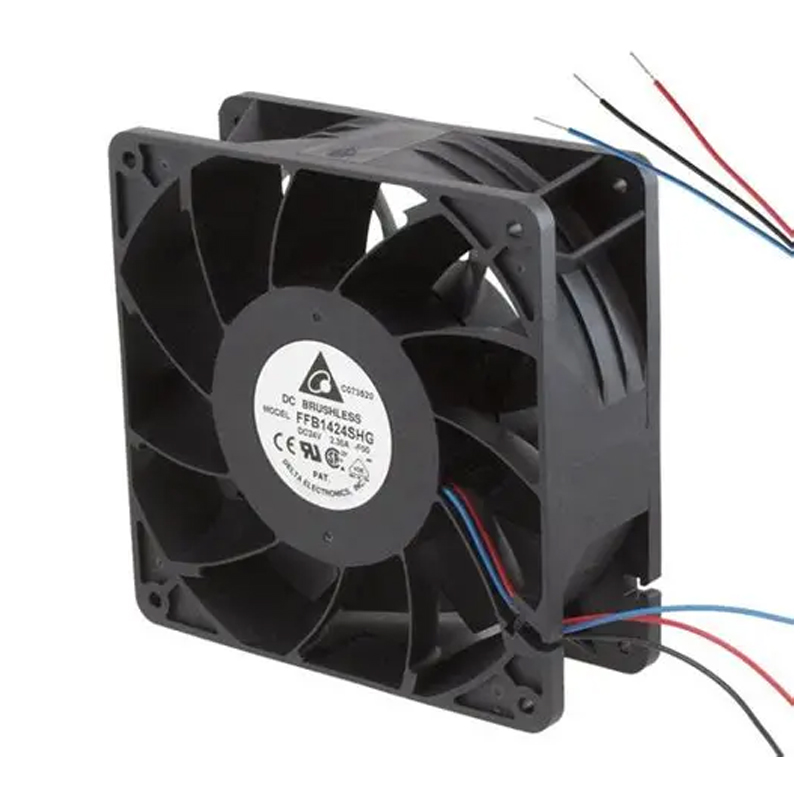
The FFB1424SHG offers a 139.7 x 139.7 x 50.8 mm axial fan assembly for server and telecom cooling. Rated for 24VDC, it lists 464 m3/h maximum airflow and 3600 rpm operation, with 36 W input power specified.
Read More
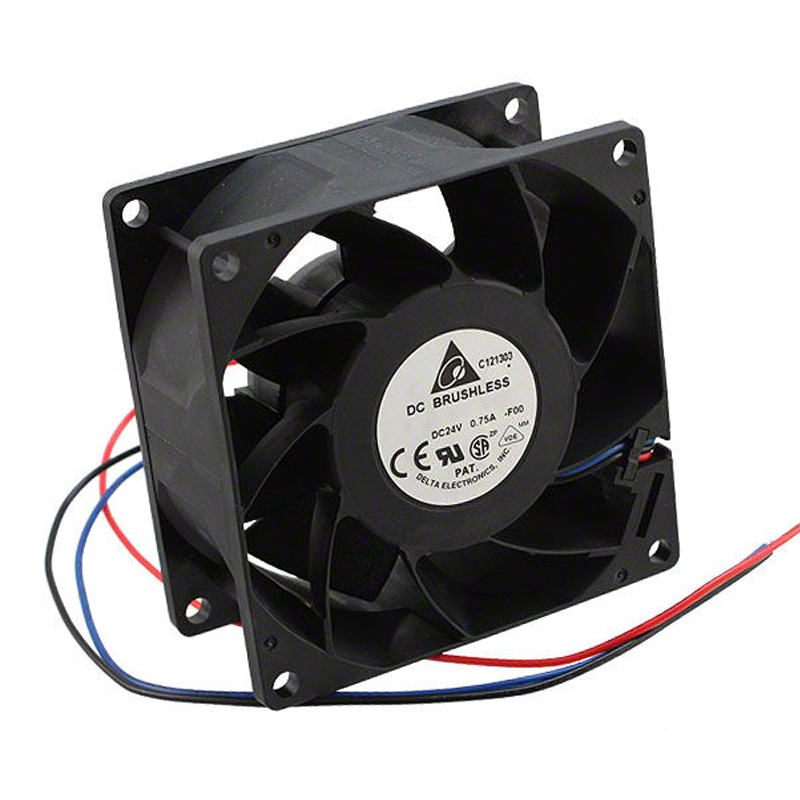
FFB0824EHE-F00 is a 24VDC axial fan for telecom and server enclosures with an 80 x 80 x 38 mm body. Its listed 202.31 Pa maximum static pressure and 5700 rpm speed define the specified airflow profile.
Read More
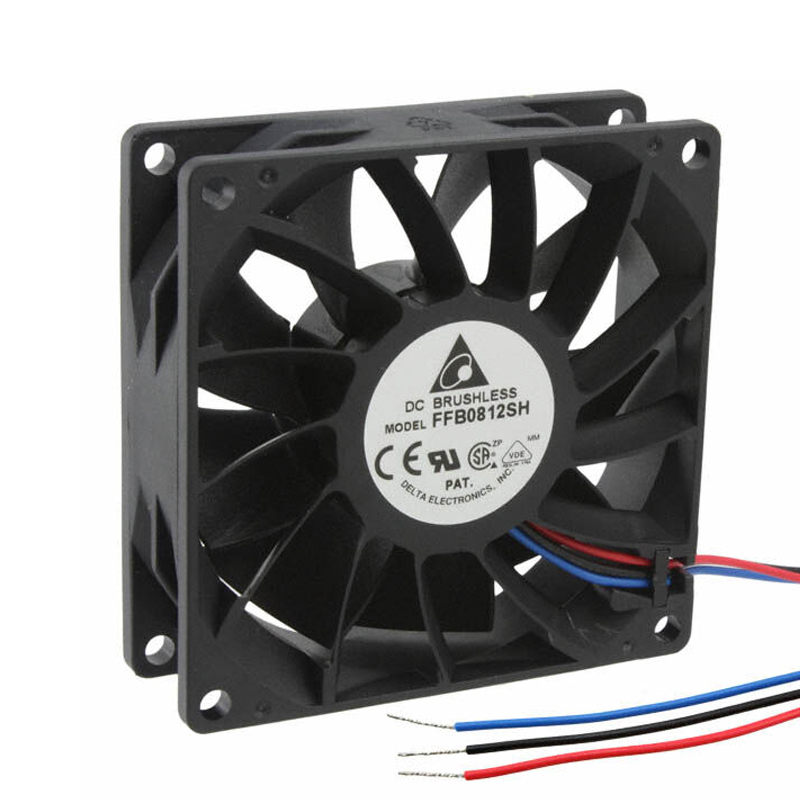
FFB0812SH-F00 is a 12VDC axial fan for telecom equipment requiring an 80 mm footprint. The 25.4 mm profile is shallower than the 38 mm EHE format, while this model lists a 4500 rpm speed and 6 W electrical load.
Read More
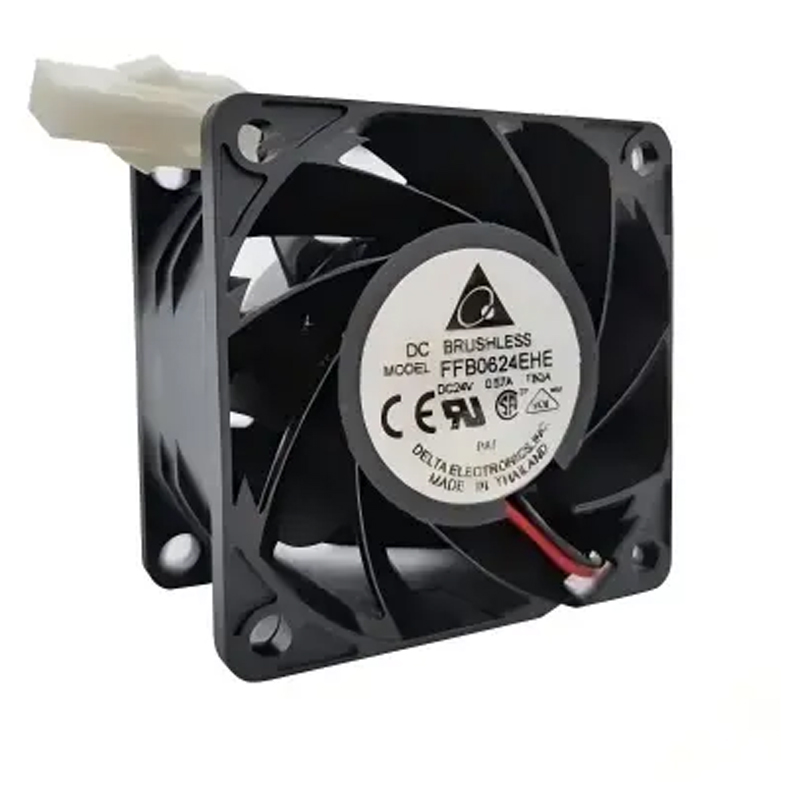
FFB0624SHE pairs a 60 x 60 x 38 mm axial fan frame with a 7000 rpm rating for server and telecom cooling. Operating on 24VDC, it lists 190.7 Pa maximum static pressure and a 6.48 W electrical input.
Read More
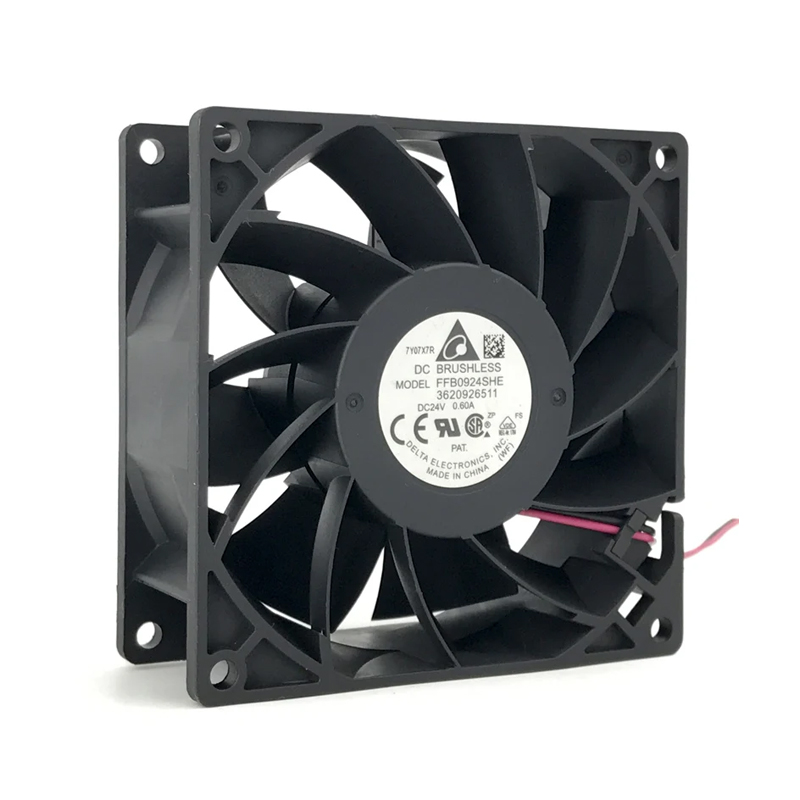
With a listed 4400 rpm speed, FFB0924SHE provides 24VDC axial fan cooling for server and telecom hardware. Its 92 x 92 x 38 mm dimensions and 9.6 W input are the principal available selection characteristics.
Read More