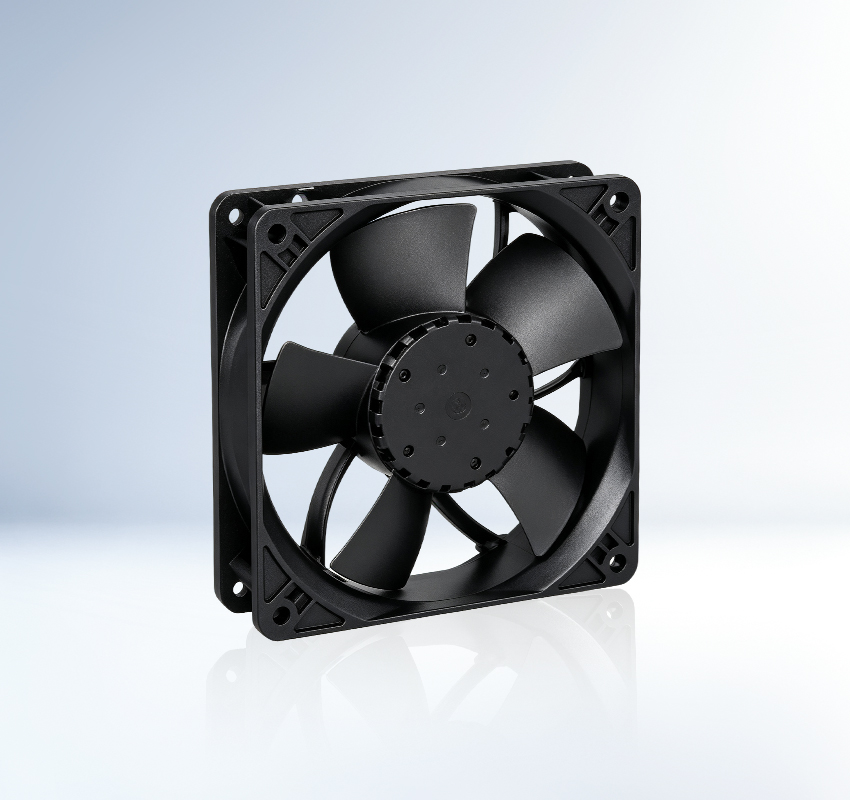
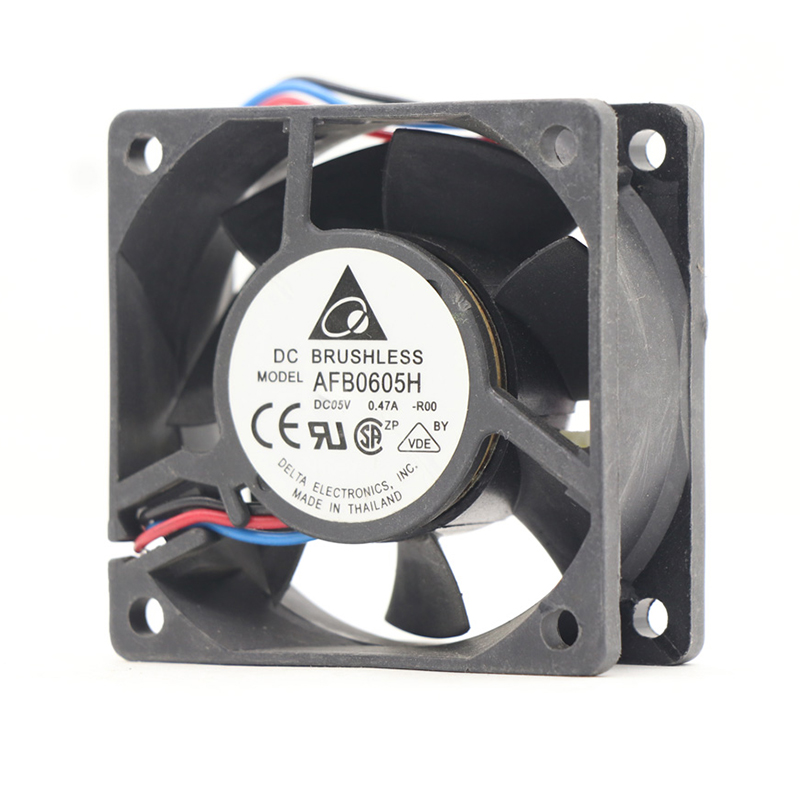
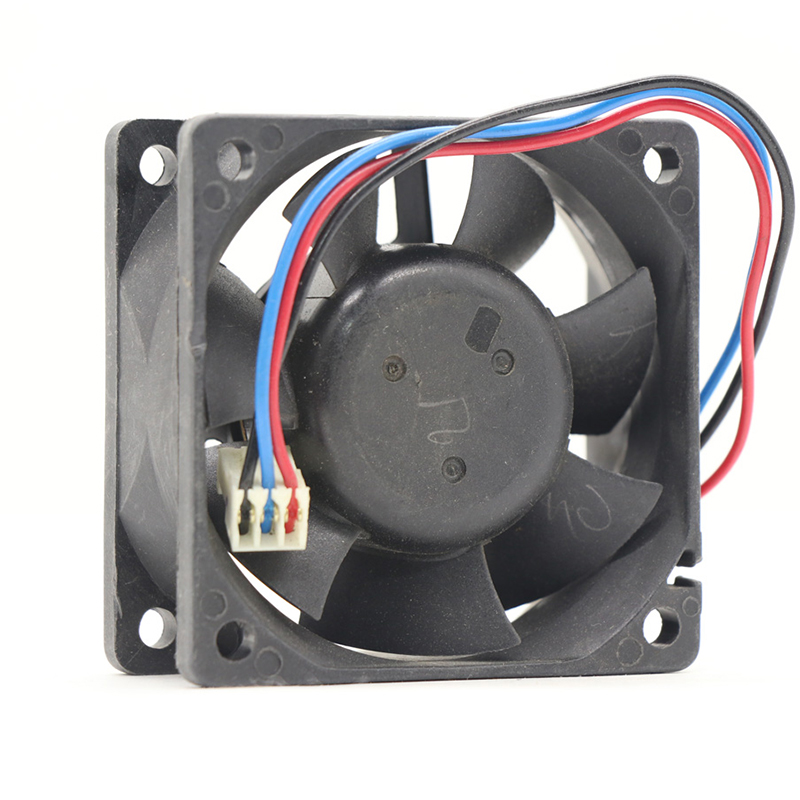
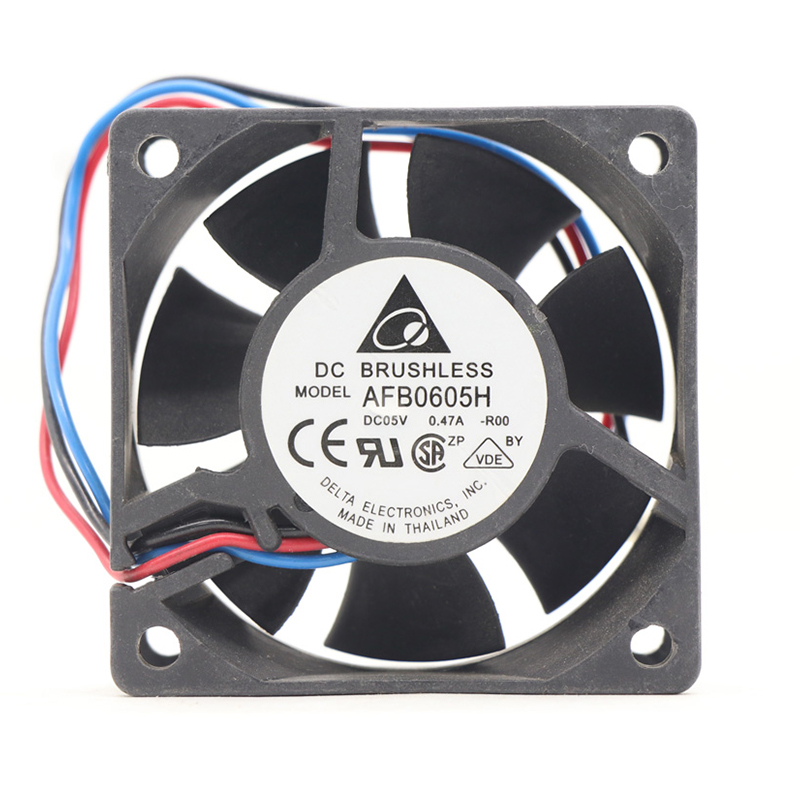
AFB0605H is a 5VDC axial fan for server, storage and power-supply ventilation. Its 60 x 60 x 25 mm envelope provides a larger frame option than the 30 mm and 40 mm low-voltage fans in the supplied list.
| Rated Voltage(V) | 5 |
|---|---|
| Size(mm) | 60*60*25 |
For industrial control equipment, the AFB0605H from Delta is a brushless DC axial fan that supports active thermal management. A planned inlet-to-outlet route helps the installation carry component heat away.
Its listed 60 x 60 x 25 mm format defines the space needed for installation, helping designers reserve room for adjacent components and cable routing. The series combines ball-bearing construction with UL 94V-0 materials, addressing mechanical durability and component flammability requirements.
For procurement, retain the complete model code and check the interface against the drawing; this supports repeatable assembly and accurate replacement ordering. Keep the complete suffix unchanged when preparing a purchase order.
Delta AFB0605H serves server and storage equipment, helping remove heat from processors, drives and other heat-producing assemblies. Airflow supports stable equipment temperatures.
Delta AFB0605H supports cooling in power-supply equipment. Air circulation around power-conversion components helps manage electrical conversion losses, supporting dependable power delivery.
In telecommunications equipment, Delta AFB0605H helps remove heat from densely arranged electronic assemblies. The cooling solution addresses continuous communication duty to support service continuity.
For industrial control equipment, Delta AFB0605H provides equipment cooling around controllers and electronic modules. Managing heat accumulated within enclosures helps maintain stable automation operation.
The supplied filter data does not establish an unconditional 24/7 rating. Confirm bearing life, temperature range, duty cycle and derating in the exact datasheet, then validate system-level redundancy.
No speed value is present in the filter row. Confirm rated speed and any control range from the exact-model specification before selection.
A matching outline alone does not prove compatibility. Check 5VDC, mounting dimensions, connector, pinout, airflow direction, control signals and the required pressure-flow point.
Allow for the listed 60 x 60 x 25 mm size and follow the exact mounting drawing. Keep inlet and outlet clear, use the specified fasteners and verify wiring before energizing the fan.
No maximum-pressure value is present in the filter row. Match the exact-model curve to the system resistance before using the fan in a restricted airflow path.
AFB0605H is listed for Server, Storage and Power Supply cooling. Confirm the installed airflow demand, pressure loss and ambient conditions before approval.

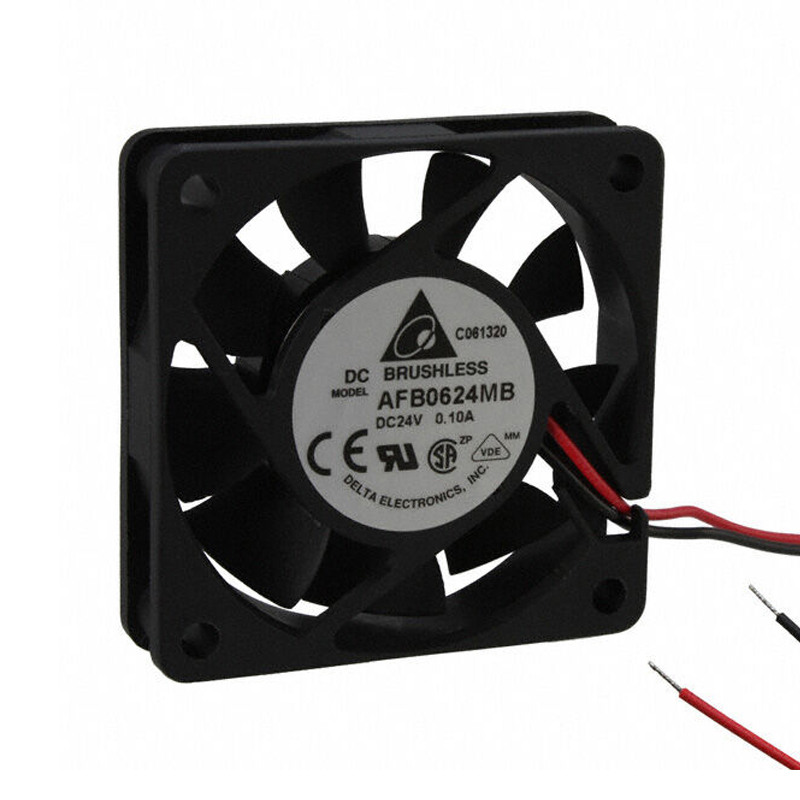
A 1.44 W input makes AFB0624MB a lower-input entry among the listed 24VDC axial fan fans. For server and power-supply ventilation, it provides a 60 x 60 x 15 mm format with a specified 4000 rpm rotor.
Read More
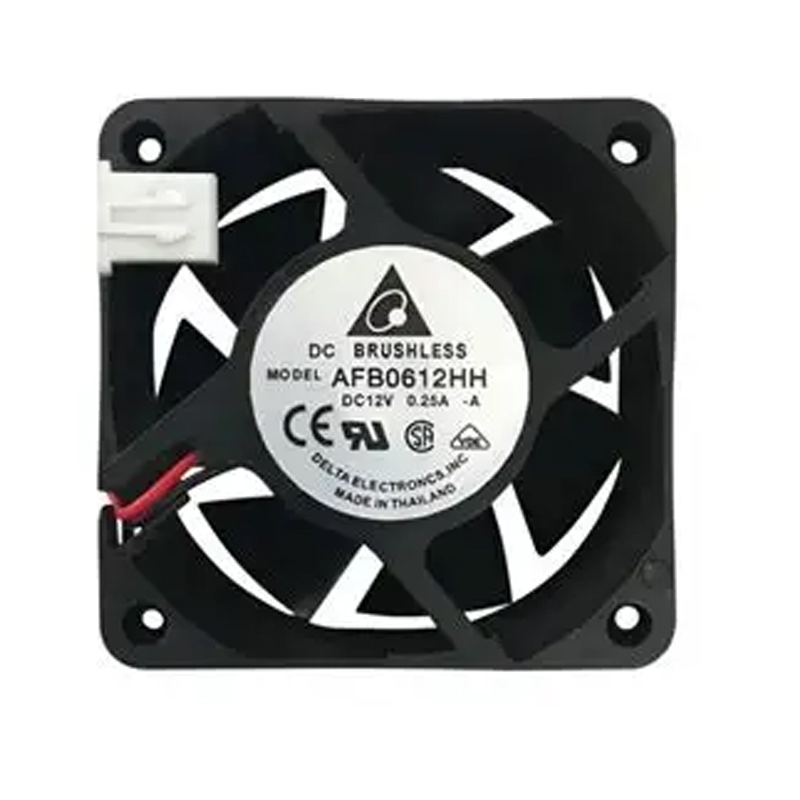
AFB0612HH-A combines a 5000 rpm rotor with a 12VDC axial fan motor for server and power-supply cooling. Its listed 2.04 W input and 74 Pa maximum static pressure accompany a 60 x 60 x 25.4 mm frame.
Read More
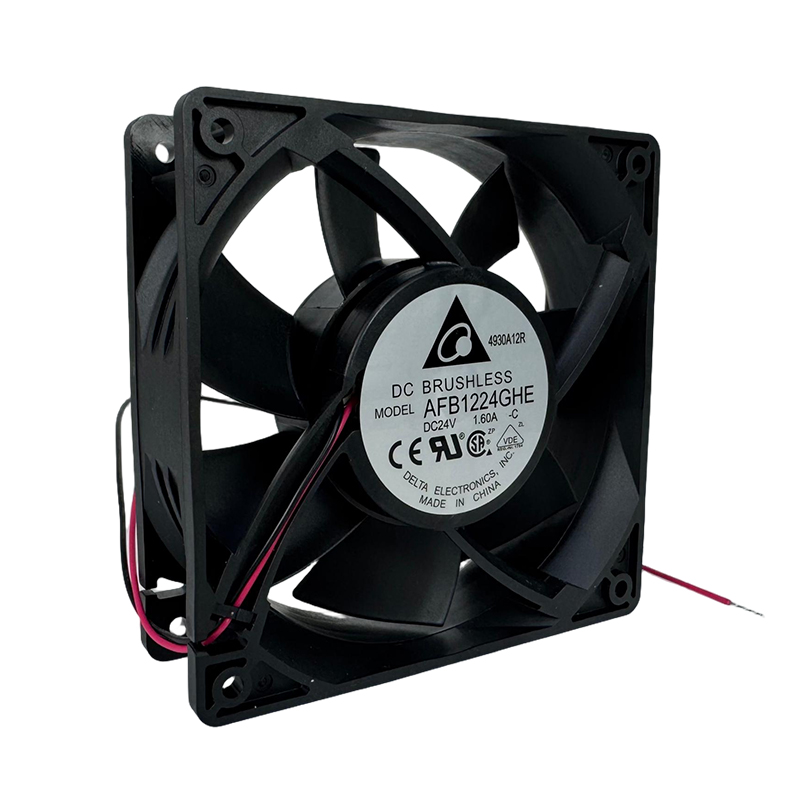
AFB1224GHE-C is a 24VDC axial fan for server chassis, with 409.7 m3/h listed maximum airflow. Its 27.6 W input differs from the 12VDC GHE entry; retain the -C suffix when checking connector and control configuration.
Read More
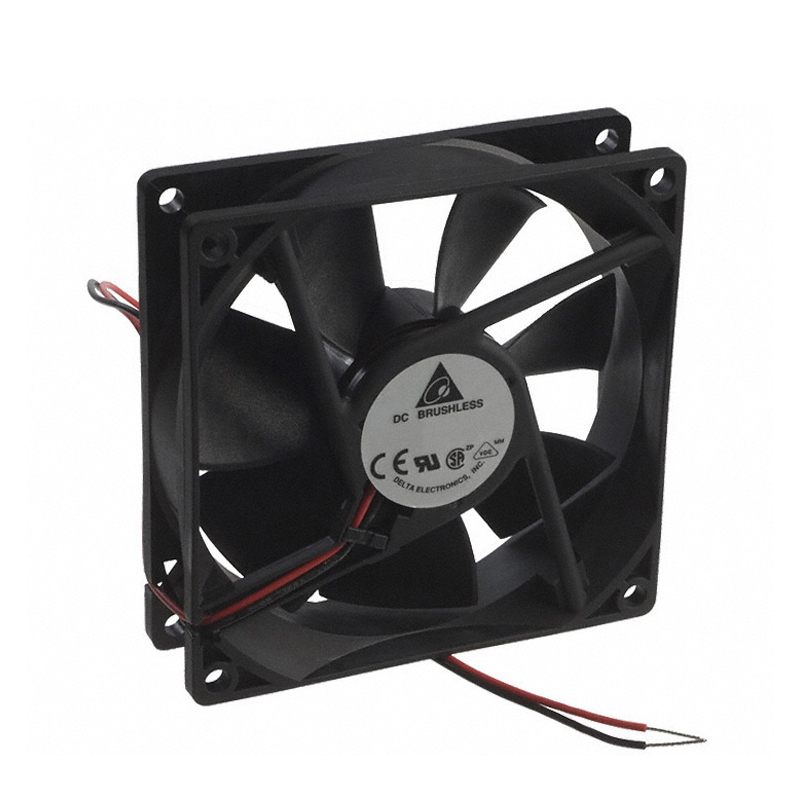
AFB0912HH supports storage-enclosure cooling with a 12VDC axial fan design. At 3200 rpm and 3 W listed input, it represents a distinct operating choice among the supplied 92 mm fans, with a specified 25.4 mm depth.
Read More
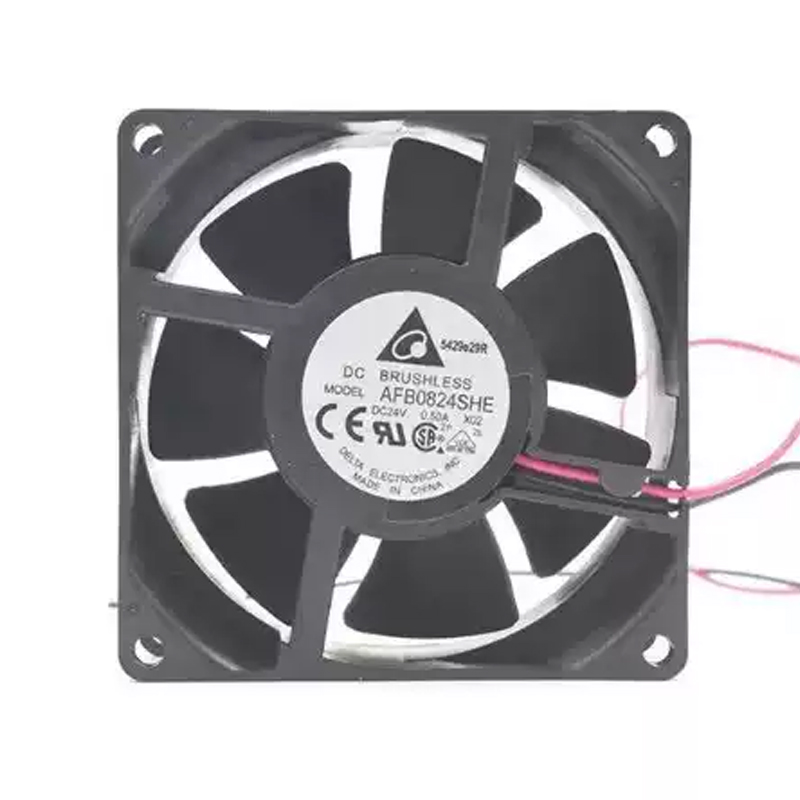
Server chassis with space for a 38 mm-deep fan can consider AFB0824SHE, an 80 mm axial model powered by 24VDC. Its listed airflow ceiling is 123.6 m3/h, a useful comparison point for enclosure ventilation designs.
Read More
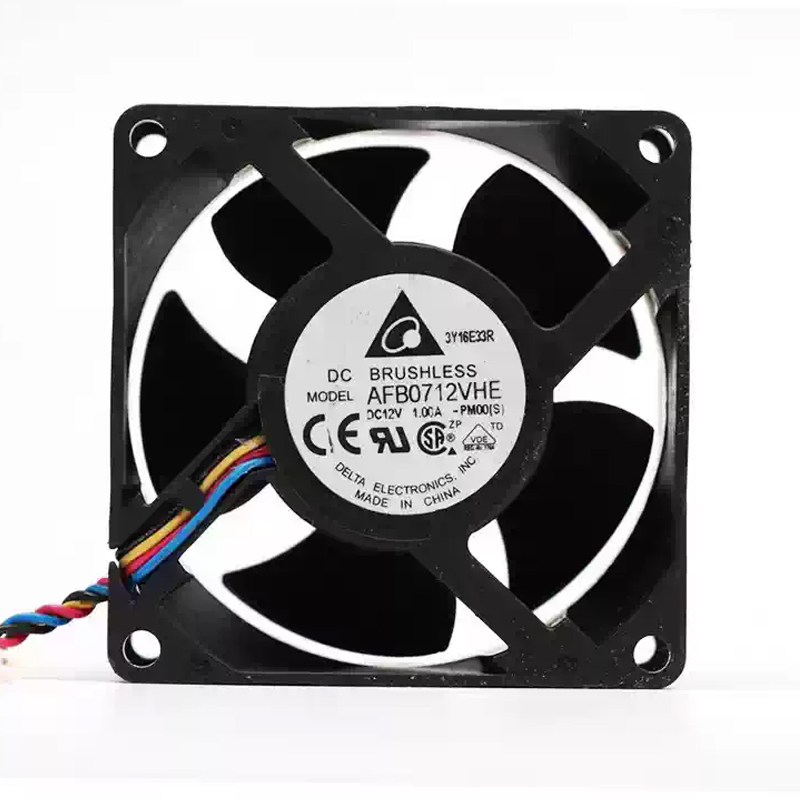
A deeper 70 x 70 x 38 mm frame distinguishes AFB0712VHE for server and power-supply cooling. The 12VDC axial fan lists 7000 rpm operation and 216.7 Pa maximum pressure, with an 8.4 W input rating.
Read More